Meet Dariusz Lange.
I help business owners build health habits that support clear thinking and reliable performance, without adding another rigid system they have to force.
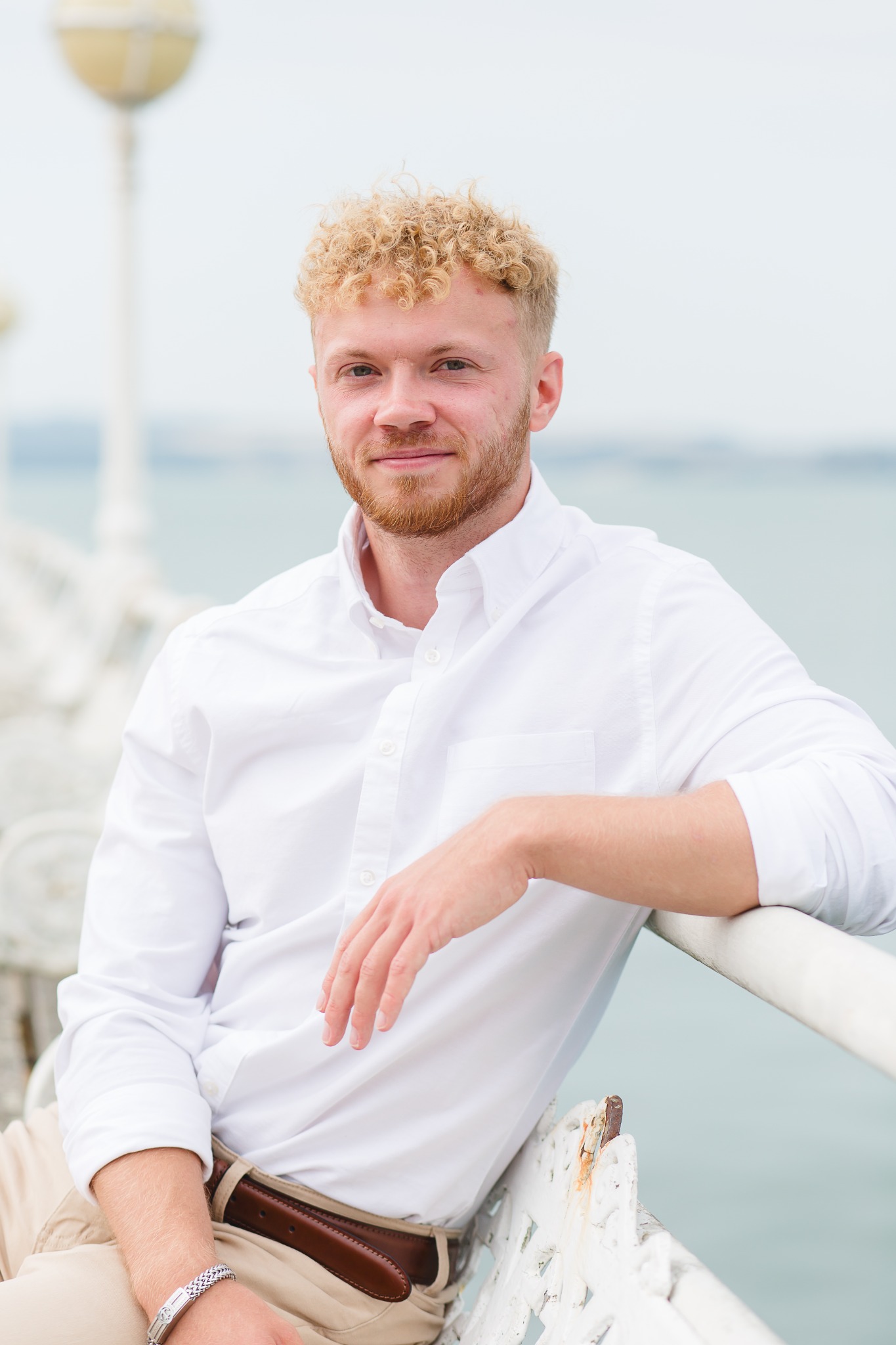
Business owners balancing work, health and training.
One useful priority, a plan that fits your week, and regular review.
Build routines and judgement you can use independently.
Why I built Skill Stack
I was never interested in collecting workout plans.
I wanted to understand why two people could follow the same advice and get completely different results. That question took me through sports science, nutrition, psychology, behaviour change, psychoneuroimmunology, physiology and hundreds of hours of independent research.
But the biggest lesson didn't come from a textbook. It came from coaching.
After working with a client for nearly 6 months, they eventually dropped out, not because they lacked motivation, but because I realised I'd been solving the wrong problem. They didn't need more accountability. They needed different skills.
That moment completely changed how I coach. Instead of asking people to "be more disciplined," I started building a system that identifies which skill someone is actually missing, then teaches that skill before moving on. That became the Skill Stack.
My own training journey
The ideas are not abstract to me.
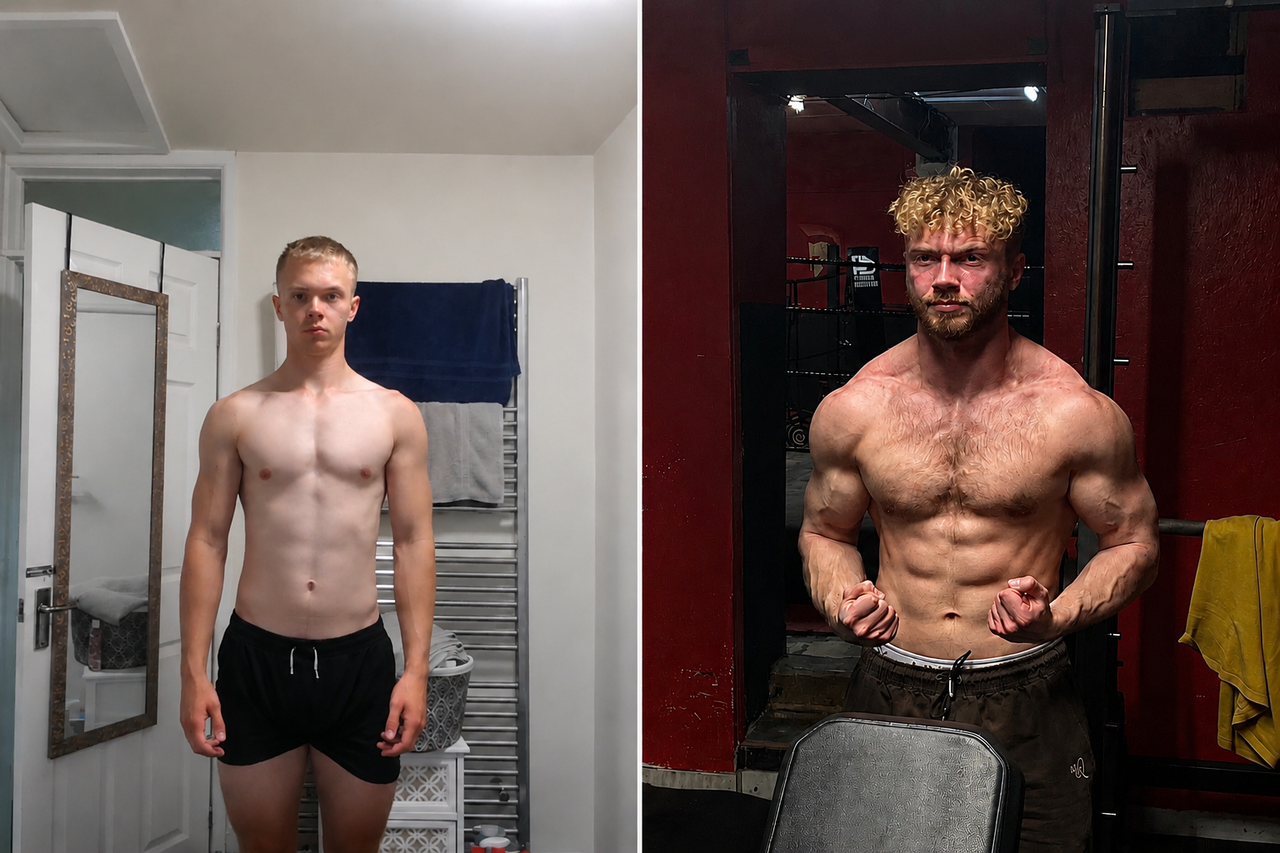
6 years between these photos. Different habits. Different thinking. Different skill stack.
The body changed because the person changed first.Education and experience.
What working together includes.
We assess before we plan.
We start with your goals, workload, current habits and the Skill Stack pattern. The point is to identify the first constraint worth solving, not to hand you a generic plan on day one.
Your training and nutrition fit your week.
I programme training around your schedule and recovery. Nutrition can include calorie, macro, protein or meal-structure targets where useful, with the level of detail matched to what you can actually execute.
I review the evidence every week.
Your check-in tells me whether we should progress, hold, simplify or recover. You are not left wondering whether a difficult week means you need more effort or a different decision.
You have direct support when life changes.
Messaging and calls are there for the moments a spreadsheet cannot solve. Workload spikes, travel, injuries, low-capacity weeks and changing goals are part of the coaching, not exceptions to it.
How I make coaching decisions
Understand the problem before adding more effort.
I want to understand why a recommendation works, what conditions it depends on and whether it fits the person in front of me. That curiosity took me from sports science into nutrition, psychology, physiology and behaviour change.
The point is not to make coaching complicated. It is to stop treating every stalled week as a motivation problem. I use the simplest intervention that fits the evidence, then change the decision when the evidence changes.
"I'm not interested in handing out programmes and hoping people stick to them. I'm interested in understanding how you think, how you make decisions, what repeatedly gets in your way and what skills will create lasting change for your specific situation."
The end goal is autonomy. Coaching should gradually make you more capable of running the system yourself, not more dependent on someone telling you what to do.
What guides my coaching
What makes my coaching different.
I coach systems, not streaks.
Most people think consistency means never missing. I don't. Real consistency is knowing how to restart. That's why we spend as much time learning recovery skills as we do building habits.
I coach the person, not the programme.
Your programme changes. Your work changes. Your energy changes. Your life changes. The coaching adapts with you.
I want you to need me less over time.
The goal isn't lifelong dependence on a coach. The goal is becoming someone who understands themselves well enough to make good decisions without needing constant accountability. That's success.
Outside coaching
When I'm not coaching.
When I'm not coaching you will usually find me learning. I enjoy testing practical ideas on myself before recommending them to anyone else. Whether that is strength training, endurance events, striking practice, behaviour change, nutrition or recovery, I like understanding how things work, not just whether they work.
I'm fascinated by the overlap between physiology and psychology because that's where lasting change happens. Coaching isn't something I switch on during working hours. It's how I naturally think.
Is this right for you?
This is for you if...
- You are ambitious, but your health habits are the first thing work pressure knocks out.
- Your energy, recovery or stress is beginning to limit how well you think and perform.
- You have tried programmes before, but they did not survive your real schedule.
- You like understanding why you're doing something.
- You want a coach who adapts rather than blames.
- You want health habits that still work when business gets messy.
- You care more about durable performance than a short burst of motivation.
Probably not for you if...
- You're looking for a six-week transformation.
- You want someone to simply tell you what to do.
- You're unwilling to reflect honestly each week.
- You're chasing perfection instead of progress.
- You expect motivation to solve everything.
A few things I believe.
"The right decision is not always to do more. It is to solve the right problem next."
The purpose of coaching is to help you understand what matters, act on it and eventually make those decisions without me.